Next in our debunking-metaverse-myths series, we look at how to predict where it's going next… 

The metaverse is currently swamped by a lot of over-commercialised fast culture (see our previous post). To really understand the direction of the metaverse, we need to interrogate the real world – where real people with real problems live – by looking at slow culture. 

To recap: fast culture is made up of areas of society that change at pace, like food trends; slow culture is formed by areas that evolve over much slower periods of time, like family and work. The metaverse’s future doesn’t lie in gimmicky brand activations. It’s within slow culture that the real clues can be found. 

Crowd Signals 

At Crowd DNA, we work with nine cultural shifts that are at the foundation of societal and cultural change (see image below). We’ve devised these via our Crowd Signals hub, inspecting social data points to predict trends that ladder up to them. By using these shifts and translating them into a digital future, we can get a glimpse of the metaverse ahead.
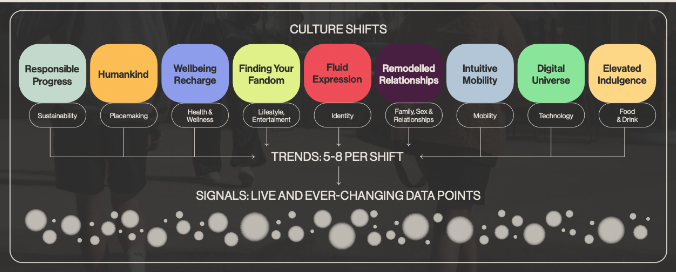
Crowd Signals is structured around a bespoke taxonomy of nine fundamentals of modern life, each evidencing a cultural shift.

Responsible Progress – Decentralised Fashion

There have been huge changes within the fashion industry over the past few years. Many of these have been as a result of its dark relationship with environmental waste, pollution and social injustice. Sustainable clothing is now available up and down the high street, and reusable or shared products are helping fight the war against fast fashion. 

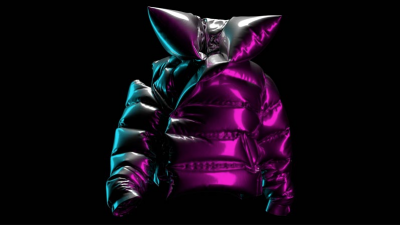
But how is sustainable fashion playing out in the metaverse? Forward thinking businesses – such as digital fashion house, The Fabricant – are building decentralised platforms that give consumers control over their own designs and output. So, instead of producing physical samples, people can research and develop their own ideas in the metaverse – reducing environmental strain on garment creation in the process. This also puts more power into the hands of consumers, challenging fashion’s hierarchical structure in the process. 

The metaverse has enormous potential to research, design and test environmentally friendly methods of production. We’ll be able to try on clothing in virtual changing rooms, design our own digital samples and discover new community generated looks – all crucial in the attempt to slow down fashion and democratise the creative space once and for all. 

Wellbeing Recharge – Optimised And Ownable Health

Global uncertainty has forced people to tune into their mental, physical and social health more than ever before. New systems of care are emerging in response. The emphasis being on systems that integrate data and individual preferences, designed to empower us to take charge and become more conscious of our own health. 

Translated into the metaverse, digital healthcare has lots of possibilities. Virtual clinics are being set up to combat geographical barriers to healthcare. A specialist can be stationed anywhere in the world, but still be able to view a patient’s scans and tests done at local facilities. While this responds to healthcare’s accessibility, digital twins are paving the way for more holistic and user-centric treatment plans. Q Bio Gemini, for example, uses patient data to create simulations of anatomy. These twins can then be shared with medical professionals, giving them a live, always-on window into a patient’s health. People will also be able to see – and ‘own’ – their own health status, as well as receive more personalised treatment plans. It seems that healthcare in the metaverse could empower people to take charge of their own wellbeing and measure it in the most complete sense.

As we can see, the metaverse is unlikely to remain as a playground for virtual yacht parties and celebrity avatars. The more we inspect slow culture, the more we can see what it will be. That is, a world powered by real humans with real human needs ­– who are not driven by consuming NFTs or eating digital burgers (or at least, not all the time). 

This blog is based on our recent Crowd DNA Amsterdam webinar, which you can read here and watch in full here

Second in our debunking-the-metaverse series, we ask whether now is the right time for brands to get involved…

As digital native generations grow up and enter the workforce, ther­­­­e’s potentially serious money to be made with the metaverse. Brands are already staking their claim and the growing energy around immersive digital experiences is fuelled by this heightened commercial interest. Even if the tech isn’t fully there yet (see last week’s post), brands are buying into the promise to be part of it in the early days, and reap the benefits later.

We can see this in how brands are activating on the metaverse right now. There’s a lot happening, but it’s all based around the same, already very tired, already over-done, commercial/PR initiatives. Whether that’s living like Paris Hilton in a branded Roblox island, watching a Selena Gomez avatar in an Animal Crossing Talk Show, or product placing some flashy Star Wars junk in Fortnite. 

As of right now, the metaverse is a lot of overly-commercialised fast culture. It only features aspects of trends that change and develop at pace – like music, food, fashion, and so on. Brands risk being inauthentic and jumping on the fads of the moment. So, is it all just hype then? Or worse, something that we’ll be laughing about in ten years time? Is the metaverse today’s Google glasses?

Already there is a clear discrepancy between the big societal shifts (slow culture) and what is currently being offered – essentially commerce, branded universes or games. So if brands can engage in that slow culture – the conversations about factors that evolve over much slower periods, such as to do with family and work, or even spirituality – then they can begin to co-create the metaverse as a place that people actually want to be. Initiatives fuelled by slow culture are needed if the metaverse is to have real impact in people’s lives (more on this in next week’s post). 

Meanwhile, there is an expectation that digital natives will push the frontier even further. With Gen Z and Gen Alpha increasingly becoming locked into digital innovation, there is a future in this space and it’s led by them. Technological developments will also 100 percent open new routes. 

The road ahead is unclear, but it’s this slow cultural energy that will really shape the metaverse of tomorrow. We need to start listening and stop crowbarring ourselves in. So, no, don’t jump on the bandwagon.

This blog is based on our recent Crowd DNA Amsterdam webinar, which you can read here and watch in full here.  

First up in our debunking-the-metaverse series, we explore what it is. And what it isn’t…

It’s “the future of how we socialise, work and play,” says Mark Zuckerberg. There is a lot of commentary about the metaverse world. Everyone is talking about it. The CEO of Disney, Bob Chapek, calls it “the next great storytelling frontier,” and there are thousands and thousands of articles written about its potential. As a brand or a business, it’s hard not to feel like it’s the place to be. 

The idea of the metaverse began in Neal Stephenson’s novel Snow Crash, where digital avatars escape to the metaverse far from a dystopian meatspace. Now, 30 years later, the term ‘metaverse’ is used to describe web3, the concept of a total convergence of our physical and digital life. 

The metaverse today is best exemplified by digital platforms like Roblox, Sandbox, Decentraland, Minecraft and Fortnite. They successfully enable virtual experiences that are enhanced by connectivity, AR and VR. To the digital native generations, this virtual space is how they socialise and hang out. They can chat with friends, build houses, or spend virtual money on virtual yachts and virtual designer clothes. 

But these early metaverse forays are actually just online experiences that have been around for ages, and lean on pre-existing in-game economies. It’s all been done before (albeit with less press attention). The metaverse could be so much more: it could be an interconnected digital system of endless immersive potential. A virtual experience across worlds, realities, gaming, digital economies, spaces, UGC platforms and hardware. 

We know there is an engaged user already there – the millions spending hours building and gaming and playing. But not yet the technologies that will help the metaverse live up to its promise of creating truly immersive experiences, such as sonic innovation, synchronised experiences, and affordable and intuitive tech. 

Only then can we imagine a world where an absolute merging of physical and digital life could happen. Where our real and virtual self could do separate tasks at the same time – maybe even have two jobs, or perhaps two different hairstyles. Or where everyone, from developing regions to established economies, has the same access to utilities and chances. Or where IRL borders are no longer relevant and people from all countries can be part of one big online society and economy.

When that happens, it won’t just be the digital natives or over-excited brands banging on about how great it is. Until then, we have to conclude that the metaverse does not exist…yet.

This blog is based on our recent Crowd DNA Amsterdam webinar, which you can read here and watch in full here.  

Twitter Passions Meets LFW

We're excited to see Twitter release the first of our Passions film series to coincide with London Fashion Week...

Keep your eyes peeled for more Passions films – covering music, food, health, news, tech and more – over 2017.

See Crowd DNA\Socialise Director Anna Chapman discuss this and other types of superfandom over croissants on March 2. Book your place now.