In the latest issue of Crowd Signals, we step into the world of Wellbeing Recharge and analyse online conversation around Psychedelic Health...
In times when our resilience is tested, we turn to ways to bolster our mental and physical health – we call this shift in focus Wellbeing Recharge. Our Crowd Signals series reports on the trends in Wellbeing Recharge, and focuses on the potent developments in Psychedelic Health.
The hard stop of the global pandemic gave many of us an opportunity to pause and reconsider the balance in our lives, while notions of collective – including global health – are now being confronted. This connection with ourselves and those around us is now a multi-layered endeavour as we explore spiritualism, tech-enabled optimisation, new-wave ingestibles and alternative healing therapies.
Our third edition of Crowd Signals is now live and available to download here. This is informed by our regular exploration of unstructured data using our trends platform Crowd Signals, designed to identify real-time cultural change and future opportunities with advanced NLP, AI and machine learning capabilities.
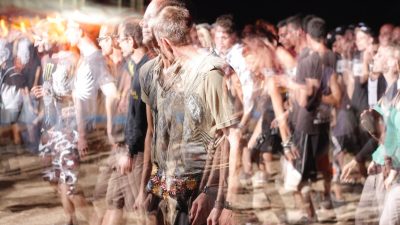
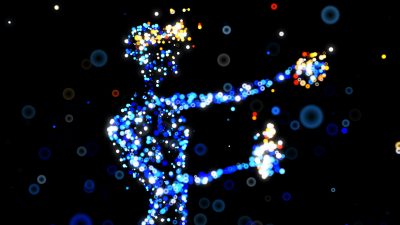
How can psychedelic drugs help us connect to ourselves...
and with others and lead us to embrace Wellbeing Recharge?
Using our Crowd Signals Hub we have identified seven trends within this shift to Wellbeing Recharge. This edition of Crowd Signals looks into one of them: Psychedelic Health. The full report features:
– innovation in health technology with start-ups in micro-dosing
– insight into how knowledge about psychedelics is shared online
– trend analysis of psychedelic use from underground to mainstream
– our emotions tracking tool illustrates the role played by trust in conversations around psychedelics.
So turn on, tune in, but don’t drop out – and read here to open your mind to all the potential.
Contact us to find out more about the seven trends in the Wellbeing Recharge culture shift, or to talk more about our Crowd Signals platform.
Second in our debunking-the-metaverse series, we ask whether now is the right time for brands to get involved…
As digital native generations grow up and enter the workforce, there’s potentially serious money to be made with the metaverse. Brands are already staking their claim and the growing energy around immersive digital experiences is fuelled by this heightened commercial interest. Even if the tech isn’t fully there yet (see last week’s post), brands are buying into the promise to be part of it in the early days, and reap the benefits later.
We can see this in how brands are activating on the metaverse right now. There’s a lot happening, but it’s all based around the same, already very tired, already over-done, commercial/PR initiatives. Whether that’s living like Paris Hilton in a branded Roblox island, watching a Selena Gomez avatar in an Animal Crossing Talk Show, or product placing some flashy Star Wars junk in Fortnite.
As of right now, the metaverse is a lot of overly-commercialised fast culture. It only features aspects of trends that change and develop at pace – like music, food, fashion, and so on. Brands risk being inauthentic and jumping on the fads of the moment. So, is it all just hype then? Or worse, something that we’ll be laughing about in ten years time? Is the metaverse today’s Google glasses?
Star Wars x Fortnite - pick your own branded lightsaber to wield across the metaverse, noise effects (hopefully) included.
Paris World on Roblox, complete with a replica of her Beverly Hills mansion, dog mansion, and a recreation of her carnival wedding.
Already there is a clear discrepancy between the big societal shifts (slow culture) and what is currently being offered – essentially commerce, branded universes or games. So if brands can engage in that slow culture – the conversations about factors that evolve over much slower periods, such as to do with family and work, or even spirituality – then they can begin to co-create the metaverse as a place that people actually want to be. Initiatives fuelled by slow culture are needed if the metaverse is to have real impact in people’s lives (more on this in next week’s post).
Meanwhile, there is an expectation that digital natives will push the frontier even further. With Gen Z and Gen Alpha increasingly becoming locked into digital innovation, there is a future in this space and it’s led by them. Technological developments will also 100 percent open new routes.
The road ahead is unclear, but it’s this slow cultural energy that will really shape the metaverse of tomorrow. We need to start listening and stop crowbarring ourselves in. So, no, don’t jump on the bandwagon.
This blog is based on our recent Crowd DNA Amsterdam webinar, which you can read here and watch in full here.
First up in our debunking-the-metaverse series, we explore what it is. And what it isn’t…
It’s “the future of how we socialise, work and play,” says Mark Zuckerberg. There is a lot of commentary about the metaverse world. Everyone is talking about it. The CEO of Disney, Bob Chapek, calls it “the next great storytelling frontier,” and there are thousands and thousands of articles written about its potential. As a brand or a business, it’s hard not to feel like it’s the place to be.
The idea of the metaverse began in Neal Stephenson’s novel Snow Crash, where digital avatars escape to the metaverse far from a dystopian meatspace. Now, 30 years later, the term ‘metaverse’ is used to describe web3, the concept of a total convergence of our physical and digital life.
Developments in technology such as VR and AR will open up even more possibilities for this space.
The metaverse began 30 years ago as a work of fiction, now is used to describe gaming platforms like Roblox and Fortnite.
The metaverse today is best exemplified by digital platforms like Roblox, Sandbox, Decentraland, Minecraft and Fortnite. They successfully enable virtual experiences that are enhanced by connectivity, AR and VR. To the digital native generations, this virtual space is how they socialise and hang out. They can chat with friends, build houses, or spend virtual money on virtual yachts and virtual designer clothes.
But these early metaverse forays are actually just online experiences that have been around for ages, and lean on pre-existing in-game economies. It’s all been done before (albeit with less press attention). The metaverse could be so much more: it could be an interconnected digital system of endless immersive potential. A virtual experience across worlds, realities, gaming, digital economies, spaces, UGC platforms and hardware.
The metaverse could become a space where digital and real life converge, from the factory floor to the meeting room.
The tech developments will drive experiences in the metaverse – but will they be magical or mediocre?
We know there is an engaged user already there – the millions spending hours building and gaming and playing. But not yet the technologies that will help the metaverse live up to its promise of creating truly immersive experiences, such as sonic innovation, synchronised experiences, and affordable and intuitive tech.
Only then can we imagine a world where an absolute merging of physical and digital life could happen. Where our real and virtual self could do separate tasks at the same time – maybe even have two jobs, or perhaps two different hairstyles. Or where everyone, from developing regions to established economies, has the same access to utilities and chances. Or where IRL borders are no longer relevant and people from all countries can be part of one big online society and economy.
When that happens, it won’t just be the digital natives or over-excited brands banging on about how great it is. Until then, we have to conclude that the metaverse does not exist…yet.
This blog is based on our recent Crowd DNA Amsterdam webinar, which you can read here and watch in full here.
Crowd Shortcuts – a quick chat about something that’s caught our attention. This week, the bad beauty revolution…
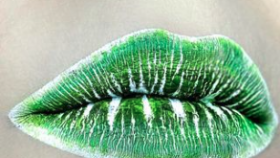
What’s all this then? People deliberately applying ‘bad’ makeup, posting it online, and dismantling conventional beauty ideals in the process. Think grey lipstick, green freckles and influencers glueing baubles to their eyelids.
Sounds messy. What’s wrong with a flash of red lippy? Quite a bit, it turns out. Bad beauty is there to disrupt old-fashioned beauty standards and make us think twice about concepts like learned attractiveness.
Gotcha, but how is it different from any other beauty trend? It’s more than just a new ‘look’. The question of what makes bad beauty bad is rooted in the dismissal of an entire industry. Although trends of attractiveness ricochet through the beauty world and are always evolving – there are certain rules that have remained fixed when it comes to the idea of ‘attractiveness’. Bad beauty bluntly rejects that with its absolute disruption of makeup’s dos and don’ts.
Fun! Exactly, the rules are well and truly out the window. Each look is unique, and no one post is the same.
@uglymakeuprevolution
@iseecaroline
@uglymakeuprevolution
So the opposite of ‘selfie face’? Yep, that’s a good way of looking at it. Bad beauty’s irregularity jars with the uniform that we’re used to seeing on social media: big lips, wide-open eyes, and feature-enhancing makeup perfectly applied.
I’ve just clumped my eyelashes together – am I ready? Absolutely. Just be aware that things are moving away from being solely concerned with defying conventionality. Bad beauty is also about inhabiting spheres of expression that extend beyond the limits of binaries and societal constructs (you look lovely, by the way).
Ah, so it’s not really ‘bad’ then. More ‘transgressive’ beauty? Sure, but that’s not as catchy. There is a shift, though, toward influencers applying bad makeup as a way of transgressing boundaries of gender, race and sexuality. It’s becoming more about expressions of total honesty, and the power that comes from ownership of personal narratives.
TL;DR: Bad beauty is so much more than aggressively clashing eyeshadow and offensively bright lip liner. It’s a new-wave beauty movement that goes against the grain and chooses self expression over conventional attractiveness.
The annual Amsterdam Dance Event is an experience close to our hearts. Here's what happened when Crowd DNA went out, out...
There are a couple of reasons why we wanted to write about the Amsterdam Dance Event (ADE) this year. First, we’re very proud to call Amsterdam one of our homes, and we like to get a chance to talk about what’s happening on our doorsteps.
Secondly, we’re strongly inspired by all of the DIY energy at the core of dance music. Blending things, improvising, getting tech to do things it wasn’t meant to do, grassroots creativity – it’s all very much in our (Crowd) DNA.
ADE has been bringing cutting edge music, club nights, industry seminars, film screenings, art exhibitions and record store happenings to the Netherlands capital since 1996 and is attended by over 400,000 people, reveling in this mix of sub-cultural expression. Here is a taste of our experiences at the five-day event this year…
Last Night A (Female) DJ Saved My Life – Andy Crysell, CEO & Founder
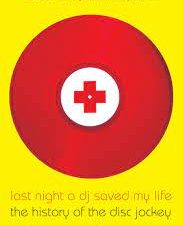
DJs/writers/dance music historians Bill Brewster and Frank Broughton staged a talk and party at ADE, marking the launch of the second edition of their highly definitive Last Night A DJ Saved My Life book. For anyone who hasn’t encountered it, Last Night… heads deep into the psyche of after dark culture and the role of the DJ, telling an inspirational underground story that weaves from reggae to disco to house and beyond.
The updated version tells the stories of women DJs
First published in 1999 as the superstar DJ blew up the dance music scene
The big shift in the new edition comes from Bill and Frank’s acknowledgement that, in the first, the input from female-identifying DJs was glaringly light. They’ve put that right this time – recognising the impact of many women DJs across many genres, including the fascinating story of Celeste Alexander, the only female DJ ever to spin at Chicago’s The Music Box, the iconic home of Ron Hardy and year zero house music.
They noted in their talk how they now aim for 50/50 female and male line-ups at their own parties and that, on top of everything else, it simply makes business sense: “doing this has completely renergised who turns up for our nights.”
Spearheaded by the likes of Charlotte De Witte and Amelie Lens, female DJs have made a monumental impression on dance music over the last half decade. But there are those, less known, who came before them. Telling their story – and thus the origins of modern sub-culture – is important to do. Props, while on the subject, to the women DJs who had a big impact on me in the past. Smokin’ Jo, Kelli Hand, Princess Julia, Nancy Noise, Lisa Loud, DJ Paulette, to name a few.
Beats And Burgers – Joey Zeelen, Director, Amsterdam and Stockholm
After the success of the pop-up PAINDEMIE, the restaurant specialising in toastie burgers recently opened a permanent location in Amsterdam Oud West. The building on the Kinkerstraat consists of two floors. The interior downstairs is inspired by a Japanese subway station where burgers, sandwiches and grilled cheese are served. Upstairs is an art deco, Japanese listening bar where vinyl records are played all weekend.
Paindemie X JEANS x Mairo Nawaz
Japanese subway or restaurant or club?
The restaurant has gained a true cult following over the last few years due to its surprising food, interior design, humorous Instagram posts and collaborations with in-vogue chefs.
During ADE the owners decided to host an early evening rave with upcoming Dutch DJs JEANS and Mairo Nawaz. Both played psy/Goa trance and techno for four hours, while the restaurant staff continued flipping burgers. The result is best described as a Blade Runner-dystopian-retro-futurism party… with amazing food.
Normally, we would be sceptical of these types of concepts. Rave culture doesn’t easily get appropriated, and brands showing up almost always seem desperate. But this was a great example of how a brand connects and amplifies underground music culture in a way that doesn’t feel contrived. Success is dependent on a symbiotic relationship, where the artists, the culture and the brand all benefit. And that’s what happened here.
EDM Wellbeing Escapes – Irina Dimitriade, Associate Director
For the metal-head in me, dance music has always been something that other people did. Until ADE 2022. There were so many amazing things about it, like seeing an entire city come together into a giant party for five days and nights. But what really did it for me was discovering EDM as an instrument for wellbeing.
ADE is a great reflection of how electronic dance music is expanding and becoming a holistic instrument for inner peace. It started with Mark to the Music, a mindful art experience at the Museum van de Geest (aka Museum of the Mind). Here, Jolien Pusthumus, a neuro-sensitive mindfulness trainer, guided us into a deep meditative journey while we created art to the amazing atmospheric beats of DJ Marcelle.
Electronic dance meditations
Irina's EDM inspired artwork
This journey continued with Reflections – a live music and meditation experience at Delight Yoga, one of the most beautiful studios in the city. For one long hour, the voice of Kat Pither from Yogi Bare and the live electronic music of Jesse Marcella guided us into a deep meditative state. The sense of expansion I felt when I woke up was out of this world!
And finally, my journey ended with a complete let-go at Nxt Museum x Transmoderna AiR, immersed in audiovisual dance culture, with sounds, pixels and NFTs. I never expected that an intimate escape into my own mind in museums and yoga studios would actually lead me towards a new tribe.
Creative Curations – Eleanor Bickers, Cultural Strategist
Located at the old military base Het Hem in Zaandam, this industrial backdrop was the ideal place to find an exhibition about the history of rave. Here it felt like we were lost in a radical alternative to contemporary society. It was reminiscent of trying to find a rave – getting lost in the tree-lined routes that snaked around the outdoor event, and all seeking out a collective experience.
With this type of energy, the exhibition had begun before we had even arrived. As cultural researchers, it was a highly interesting and immersive route into an event. Inside the old bullet factory, Sweet Harmony: Out of the Underground told the story of the history of the Dutch rave scene in the eighties and nineties, with contemporary perspectives of queer techno politics and resistance.
Artworks with no descriptions
Exploring the provocative art space
It explored the idea that rave culture shouldn’t (just) be romanticised, as it’s a complex ecosystem of liberation, togetherness, and unmediated human interaction. We were encouraged to select our own path through the exhibition. The event curation kept us on our toes – such as with the absence of lengthy descriptions. Rave culture may have been talked about many times before, but the experiential nature of Sweet Harmony helped us look at it with a fresh narrative.
As part of our ongoing commitment to workplace diversity, we’re partnering with the 10,000 Black Interns initiative…
As a global agency with offices in seven cities, working at the intersection of brands and culture, people – and all their many, wonderful, kaleidoscopic backgrounds – form our foundations. Diversity, therefore, is a huge part of what we do, and what we stand for as a team.
But we’re aware of our limitations. Building a truly diverse company is something we constantly have to work at – and sometimes we have to call in help from elsewhere.
That’s why we’re excited to partner with 10,000 Black Interns, a charity dedicated to creating opportunities for underrepresented young Black talent talent. We’ll be joining a line up of businesses promising to cumulatively hire 10,000 Black interns amid a push to improve the diversity of the UK’s professional industries. Last year, 70 percent of the applicants said they wouldn’t have received an internship if it hadn’t been for the programme.
Our partnership with 10,000 Black Interns means we will be offering three paid intern opportunities in 2023 through our Culture Club programme (a significant number of Culture Clubbers go on to permanent roles at Crowd DNA). If this is something that interests you, head here to apply. And please share this news with anyone else who might want to hear about it.
You can read more about 10,000 Black Interns here; our own internship scheme, Culture Club, here and our commitment to the MRS Pledge here.
Hello Los Angeles. We're so happy to be opening there today and Crowd DNA founder/CEO Andy Crysell explains why...
It’s a proud and exciting day at Crowd DNA today, as we lift the curtain on our seventh office. This time our adventures take us to Los Angeles and we’re delighted to welcome on board David Stewart as our head of agency.
Why Los Angeles? Well, first up, why anywhere? We could do much of the global work that we do just from London, our original base. But we know we create a more compelling and human business by being about more than that. By placing ourselves closer to people and to the source of culture. We are more interesting for our clients and we bring together a more interesting team, too; one with broader perspectives, reference points and stories to tell.
London, Amsterdam, New York City, Singapore, Sydney, Stockholm – we’re proud of our leadership and of our teams in each of these locations. The mind-blowingly good work they create, the purposeful collaboration between them, and just how passionately they all dive into the inherent messiness of our culturally charged commercial advantage ethos. They have made Crowd DNA so very much more energized and thrilling than anything I could’ve cooked up just from London alone.
Yeah, but why Los Angeles? It’s a fascinating place – its origin story through to the distinct sub-cultures it’s created. My first visit was in 1997. I was there, as a journalist, to interview Wu-Tang Clan (who’d decamped to the city in the hope of getting their album finished) and, within three hours of me landing, what became known as the Real Heat (as in the movie) Bank Robbery kicked off, with the sky full of smoke and helicopters, and wall to wall coverage across every TV channel.
I’ve been back multiple times since – sometimes for a day or two, sometimes working there for four or five weeks. No other bank robberies of note, but it really is a place that gets under your skin. Some people from the UK and Europe get kind of sniffy about Los Angeles, thinking it soulless or center-less. I think it’s a place of limitless possibilities. Fabulous communities and people making new things happen, often from scratch. Los Angeles has its own kind of creativity.
We expect the briefs that Crowd DNA Los Angeles receives to be as varied – and amazing – as across our other offices. But we are particularly excited about the opportunities we will have here to dive deeper into the future of entertainment, a space that’s always been strong in our work. Web3, fandom, platform disruption, game-changing new content and ever more immersive experiences. So much of this is of interest to our clients (both in media/tech, and across other categories) and we’re keen to get closer to it all in Los Angeles.
Why David Stewart? We’ve had some fantastic conversations with David over the last couple of months and we can tell that he cares about the right stuff, the important stuff – both in the work and in our culture. His brilliant experience at agencies such as Kelton, Coherency and Jigsaw International helps too. We think he’ll be a wonderful addition to our senior team and we can’t wait to get to know him better.
And if you’d like to get to know him better, you could always check the Los Angeles openings on our careers page. We’re looking forward to now building out our team there.
Or if you’d just like to learn more about what we’ll be doing in Los Angeles, perhaps how we could collaborate in some form or fashion, do reach out to me or to David. (a.crysell@crowdDNA.com / d.stewart@crowdDNA.com).
Crowd DNA Los Angeles – a nice way to start the week.
Download a copy of our Local Love In APAC report - produced in partnership with our KIN network
Part of our KIN Connects series, Local Love In APAC is a project from our Singapore and Sydney teams that illuminates an interesting cultural tension in the region – a kind of cognitive dissonance between the inescapable desire to be citizens of the world and an innate sense of place, connection and pride in localism.
Working with contributors from KIN, our network of creators and connectors, based in China, South Korea, India, Indonesia, and Singapore, we’ve identified three emerging shifts within this new wave of Asian representation.
Shift 1: (From) Homogenised cultural ideals → (To) Remix culture